
Plato was one of the most influential philosophers in Western history and a central figure in classical Greek thought. A student of Socrates and the teacher of Aristotle, Plato helped shape philosophy, education, politics, and science for more than two thousand years. His writings preserve Socrates’ ideas while also developing original theories about knowledge, reality, ethics, and society.
Plato was born into a wealthy and politically connected Athenian family during a time of great cultural achievement and political instability. His original name was likely Aristocles, and the nickname “Plato” (meaning broad or wide) may have referred to his build or rhetorical style.
As a young man, Plato was deeply affected by the trial and execution of Socrates in 399 BCE. This event convinced him that Athenian politics were flawed and that society needed leaders guided by wisdom and justice rather than power or popularity.
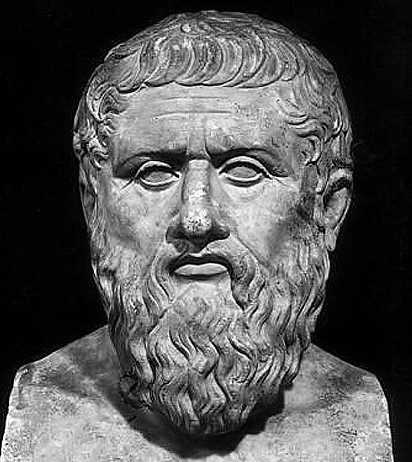
Unlike Socrates, Plato wrote extensively, but he rarely spoke in his own voice. Instead, he presented philosophical ideas through dialogues, dramatic conversations in which Socrates and other characters debate major questions.
Through dialogue, Plato explored:
This style encourages readers to think critically rather than accept simple answers.
One of Plato’s most famous ideas is the Theory of Forms. Plato argued that:
For example:
This theory helped Plato explain how we can have knowledge of universal concepts despite living in a changing world.
Plato believed that learning is not simply absorbing information but awakening understanding.
His most famous illustration of this idea is the Allegory of the Cave, found in The Republic.
In the story:
The allegory represents:
Plato believed that a just society must be governed by wisdom. In The Republic, he proposed the idea of the philosopher-king—a ruler trained in philosophy who understands truth and justice.
While some of his political ideas are controversial today, they sparked centuries of debate about governance, ethics, and leadership.
Around 387 BCE, Plato founded the Academy, one of the first formal institutions of higher learning in the Western world. Students studied philosophy, mathematics, astronomy, and science.
The Academy emphasized:
It remained active for nearly 900 years and directly influenced the development of universities.
Plato’s influence is vast and enduring. His ideas shaped:
Later thinkers—especially Aristotle—built upon, refined, and challenged Plato’s ideas, creating the foundation of Western intellectual tradition. The philosopher Alfred North Whitehead once remarked that Western philosophy is "a series of footnotes to Plato."
Plato matters because he asked questions that remain central today:
For students, Plato demonstrates the power of deep thinking, careful reasoning, and the courage to question appearances in the search for truth.


 Contact Us